The Queyras is often associated with vast spaces, peaks, and mountain activities. However, its cultural heritage is just as worthy of detour. Fortifications, traditional villages, sundials, museums, and artisanal know-how tell several centuries of history and testify to the way the inhabitants have adapted to life at altitude. Organize a stay in the Alps around cultural sitesthus allowing for easy alternation between hikes, discoveries, and heritage visits.
Fort Queyras, a landmark of the valley
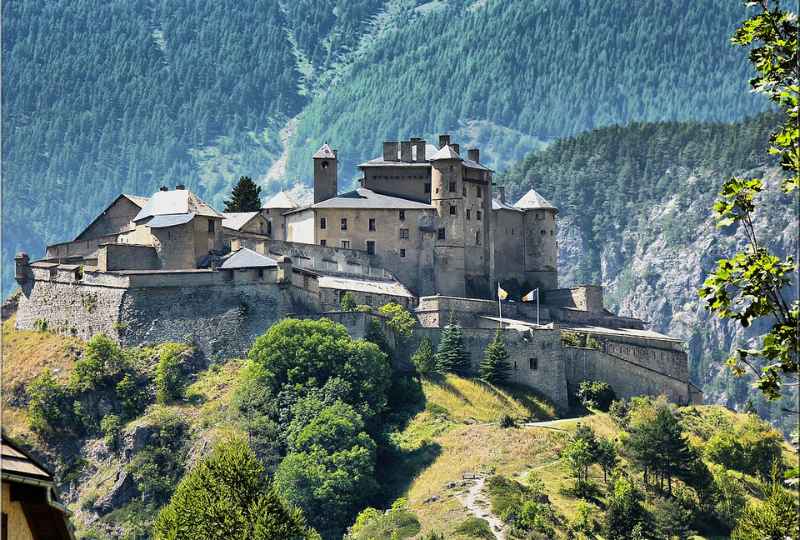
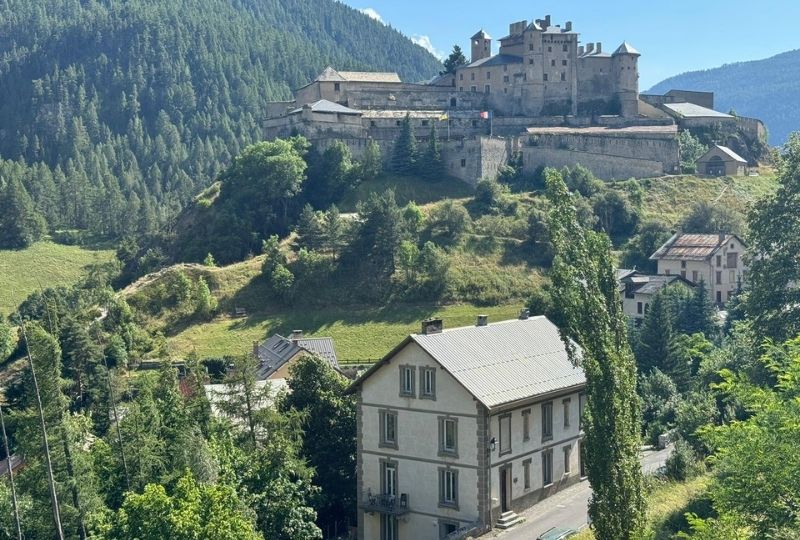
It is impossible to evoke the local heritage without starting with Fort Queyras, located in Château-Queyras. Perched on its rocky spur above the Guil, it has accompanied the landscape for several centuries and is one of the most recognizable monuments in the valley.
The site associates a medieval castle from the 13th century with military adaptations made over time, including after the intervention of Vauban at the end of the 17th century. Bastions, moats, gunpowder magazines, keeps, and other defensive elements allow us to explore several centuries of military architecture.
Fort Queyras is also listed as a Historical Monument since 1948. A particularly interesting visit to understand the strategic importance that this Alpine valley has long occupied.
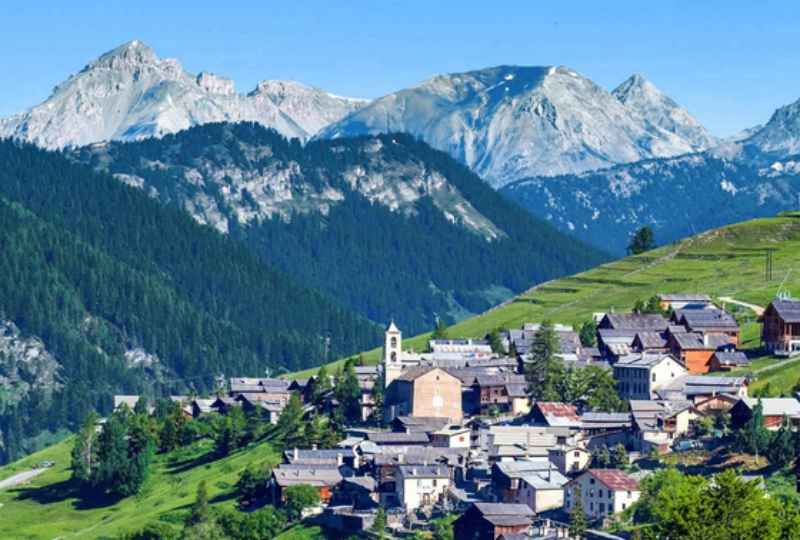
Saint-Véran, a village where heritage is discovered by walking
In Saint-Véran, cultural discovery is not limited to a monument. It is the village itself that invites one to observe its architecture and the traces left by several generations of inhabitants.
As one walks through the alleys, the traditional houses, the church, the mission crosses, and the many sundials compose a heritage closely linked to life in the mountains. The tourist office lists more than twenty sundials in the village and its hamlets, several of which were made in the 19th century by Giovanni Francesco Zarbula.
Le Soum, to discover life from the past
To extend the visit, Le Soum – Museum of Arts and Traditions allows you to enter a house whose history dates back to 1641. The preserved spaces, objects, and tools provide a concrete insight into the daily life of the inhabitants and their adaptation to the constraints of high mountain living.
The church of Saint-Véran constitutes another interesting step. Its interior notably houses baroque furniture and an altarpiece dating from 1684, bearing witness to the artistic influences that have crossed the Alps.
Mont-Dauphin, in the footsteps of Vauban
Near Queyras, Mont-Dauphin offers another facet of the military history of the Hautes-Alpes. The fortress was created starting in 1692 at the initiative of Vauban to strengthen the defense of the alpine border after the offensive by the Duke of Savoy.
Today, the fortified village is listed as a UNESCO World Heritage site as part of the fortifications of Vauban. Ramparts, moats, and ancient military buildings help to understand the organization of this stronghold imagined both as a defensive work and as a living space.
Mont-Dauphin also welcomes in the Rochambeau barracks the sculpted ensembleLittle Bighornby Ousmane Sow, composed of 35 monumental sculptures. An original meeting between military heritage and contemporary artistic creation.
The House of Crafts, showcase of the know-how of Queyras
The heritage of a territory is not limited to its monuments. In Ville-Vieille, the Maison de l’Artisanat allows you to discover another dimension of Queyras culture: that of local know-how and productions.
The Cooperative of Artisans of Queyras – Pays du Viso brings together creations and products related to decoration, pottery, jewelry, books, gourmet products, and various artisanal trades. It is a complementary stop to historical visits to better understand what currently sustains the identity of the territory.
Museums to better understand the history of Queyras
If you wish to devote a larger part of your vacation to culture, the area has several small museums and interpretation spaces. The tourist office notably lists the Moulin d'Arvieux, the Museum of Toys of Queyras, the Museum of the School of Yesteryear, the Armoire aux 8 Serrures, and the Arche des Cimes.
These visits allow for the discussion of very different subjects: daily life, craftsmanship, environment, traditions, or local history. They are also a good way to vary activities during a stay in the Alps dedicated to cultural sites, especially when the weather is less suitable for long outings in the mountains.
Culture and mountain: another way to discover the Queyras
What makes the heritage of Queyras particularly interesting is its permanent link with the landscape. Here, the fortifications respond to the strategic position of the valleys, the traditional houses bear witness to the constraints of altitude, and the sundials remind us of the importance of climate in daily life.
The territory also benefits from the label Pays d’art et d’histoire and offers visits that allow both the villages and the fortifications, rural architecture, churches, sundials, crafts, and agricultural traditions to be explored.
Taking the time to discover this heritage thus brings another dimension to the holidays. A day may start with a walk in nature, continue with a visit to a village or a museum, and end peacefully facing the mountains.
The Villa Belle Fleur, in the heart of Queyras for your discoveries
Located in Château-Ville-Vieille, Villa Belle Fleur offers a practical starting point to explore the heritage of the valley. Fort Queyras is in the same commune, while Saint-Véran, the villages of Queyras, and the various museums and cultural sites in the area can easily be integrated into your stay.
Staying in the heart of the valley allows you to take your time: discover a village in the morning, enjoy the mountain in the afternoon, and then return to the comfort of your apartment. A pleasant way to combine heritage, nature, and vacation in the Hautes-Alpes.
Conclusion
Choose the Queyras for a stay in the Alps to discover cultural sites, c’est regarder la montagne autrement. Derrière les paysages se dévoilent des forteresses, des villages préservés, des traditions et des savoir-faire qui racontent l’histoire de ce territoire singulier. De Fort Queyras à Saint-Véran en passant par Mont-Dauphin et les musées locaux, les possibilités de visites ne manquent pas.
Envie de découvrir le patrimoine du Queyras à votre rythme ? Faites de la Villa Belle Fleur votre point de départ et réservez votre prochain séjour au cœur des Hautes-Alpes.